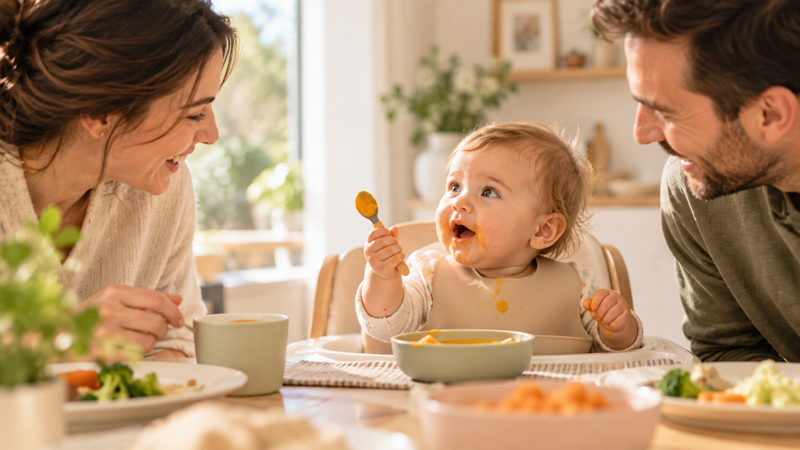
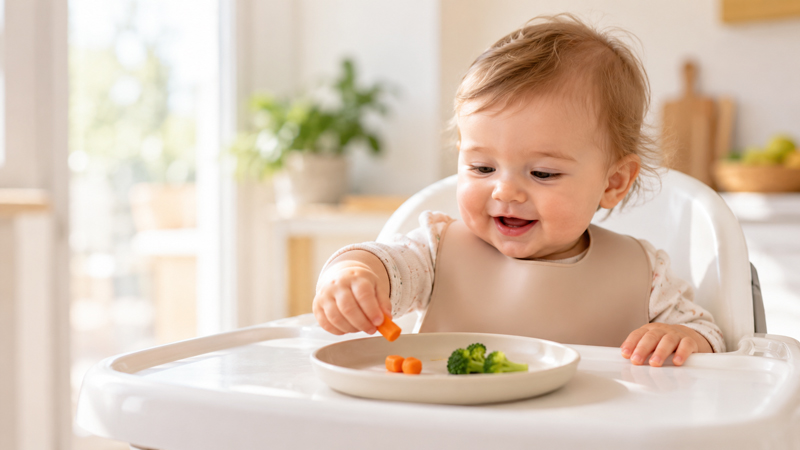
The first few weeks of solids feel unforgettable. Then, somewhere around the twentieth new food, the details start to blur. Did she try avocado before or after the trip? Was it the pear or the peach he pushed away? When did you last offer broccoli?
A simple first foods log answers those questions in seconds. It also gives you something you'll be glad to have later: a record of one of the messiest, funniest chapters of your baby's first year.
Here's what's worth writing down, three easy ways to keep track, and a few habits that make it stick.
Why track your baby's first foods?
When you're short on sleep, memory isn't the most reliable tool. A log takes the guesswork out of everyday questions and keeps the small moments from slipping away.
- See what you've tried. A quick glance shows which foods your baby has met and which ones you haven't offered yet.
- Remember what didn't go well. The funny faces and the "no thanks" moments are part of the story too. A log helps you remember which foods they were.
- Keep everyone on the same page. When a partner, grandparent or caregiver also feeds your baby, a shared record saves a lot of "Did he have this already?" messages.
- Have notes ready for your pediatrician. If you have a question at a checkup, it helps to have dates and details in one place.
- Keep the memories. The first face, the first mess, the first food they reached for again. Those are worth saving.
What to write down for each new food
You don't need a detailed diary. These few details cover almost everything you'll want to look up later:
- Date. The anchor for everything else.
- Food. If several foods were on the plate together, note all of them.
- Reaction. Loved it, neutral, or didn't like it. Three options are enough.
- How much they ate. Just tasted, a few bites, ate well. A rough estimate is fine.
- Notes. In your own words: a funny face, who was at the table, anything you want to remember.
- A photo. It brings back details your notes won't.
- Anything you want to ask your pediatrician about. You don't need to interpret anything. Just write down what you noticed and when. If something worries you, contact your pediatrician.
Keep it short. A log you fill in for thirty seconds beats a perfect one you abandon after a week.
Three ways to track first foods
1. A notebook. The simplest option. There's nothing to set up and nothing to charge. The downside: it's hard to search, your photos live somewhere else, and it's easy to leave at home.
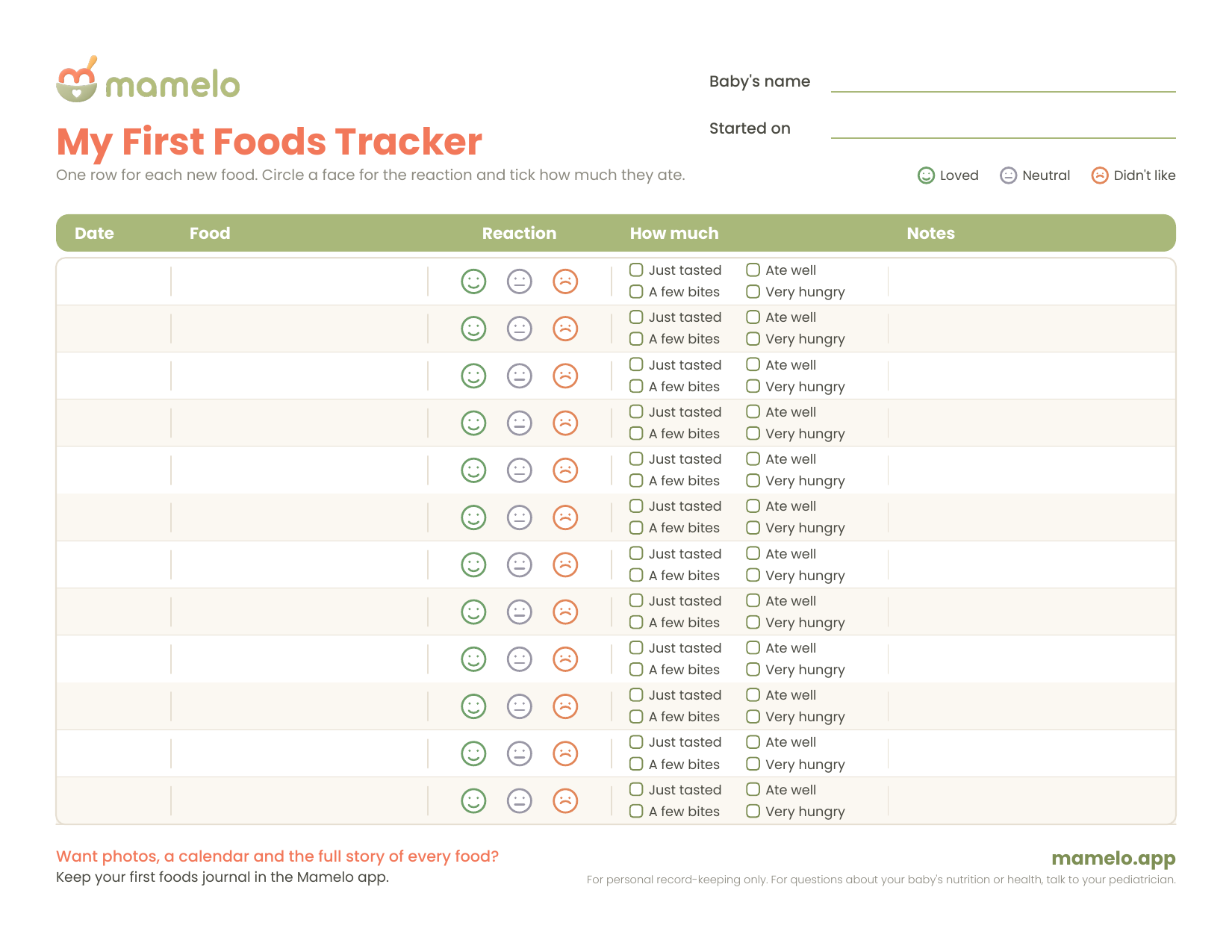
2. A printable tracker. A sheet on the fridge gives you the big picture at a glance, and checking off a new food feels satisfying. The downside: there's little room for notes, no photos, and it's hard to see the full history of a single food.
3. An app. Everything lives in one place, photos included. You can search, filter and look back at any food's history in seconds. The downside: it means a phone at the table, and some apps ask for an account or a subscription.
Many parents combine them: a printable on the fridge for the overview, an app for the details and photos.
How to make tracking a habit
- Log right after the meal. By bedtime, the details are already fading.
- Take the photo first. It takes two seconds and reminds you of everything else.
- Use quick choices instead of sentences. Tap or tick the reaction and amount; add a note only when there's something to say.
- Do a five-minute weekly look back. See what's been tried and which moments you want to remember.
- Agree on who logs. If several people feed your baby, decide who records each meal.
- Don't aim for perfect. Missed a few days? Just pick it up again at the next meal.
How Mamelo makes it easier
We built Mamelo for parents who want this kind of record without the extra work. It's a first tastes journal: you log what happened, and it keeps everything organized for you.
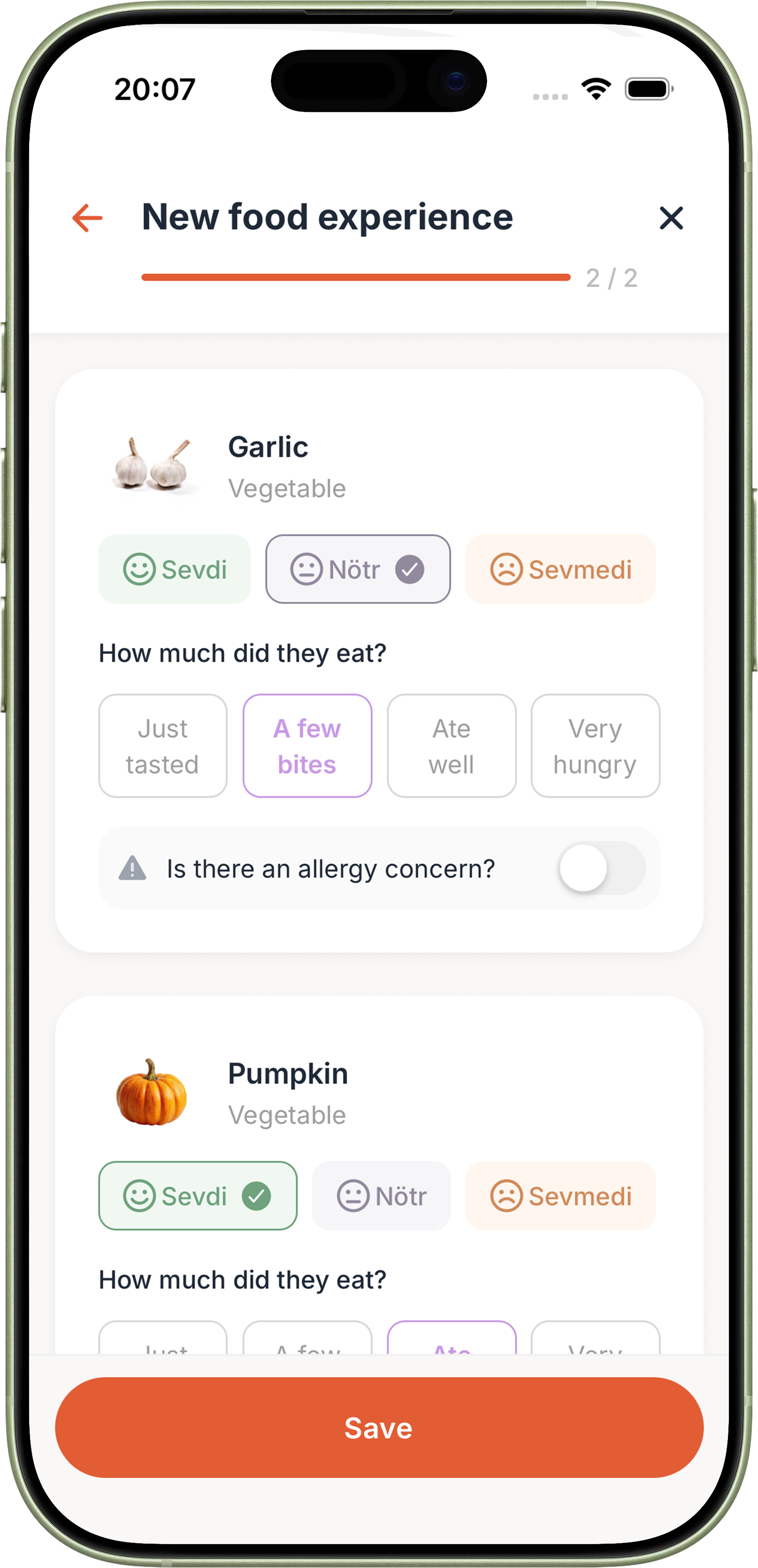
- Log a tasting in a few taps: choose from a library of hundreds of foods or add your own, and add several foods to the same meal.
- Record the reaction (loved it, neutral, didn't like it), how much your baby ate, your notes, and a possible allergy concern if you want to keep track of one.
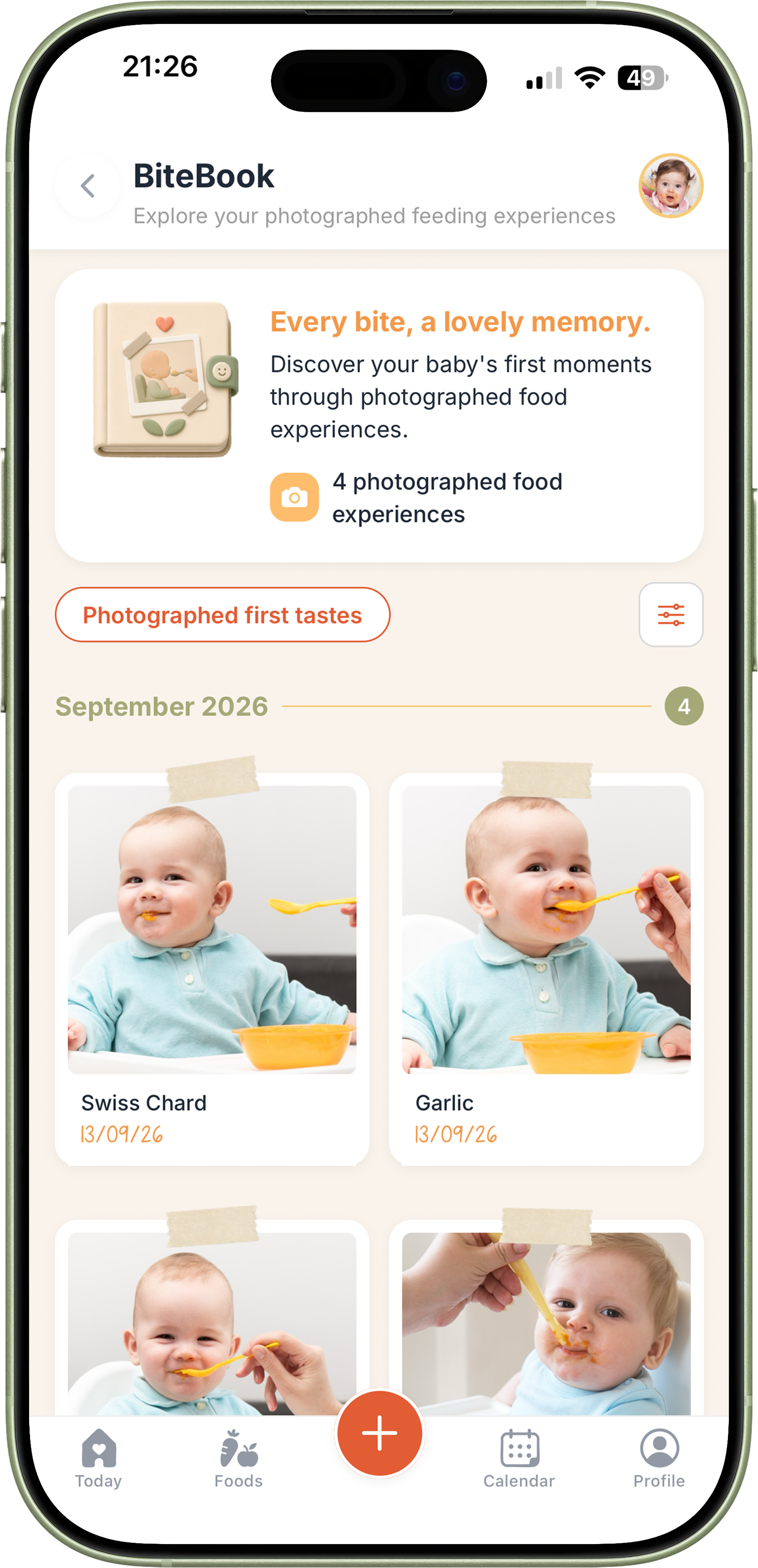
- Add a photo, and your tastings with photos become a personal memory collection in BiteBook.
- See past tastings on a calendar and filter by reaction, allergy concern or notes.
- Follow your baby's progress across food categories and open the full history of any food.
- Share your favorite moments with family as photo cards.
- Start right away, no account needed.
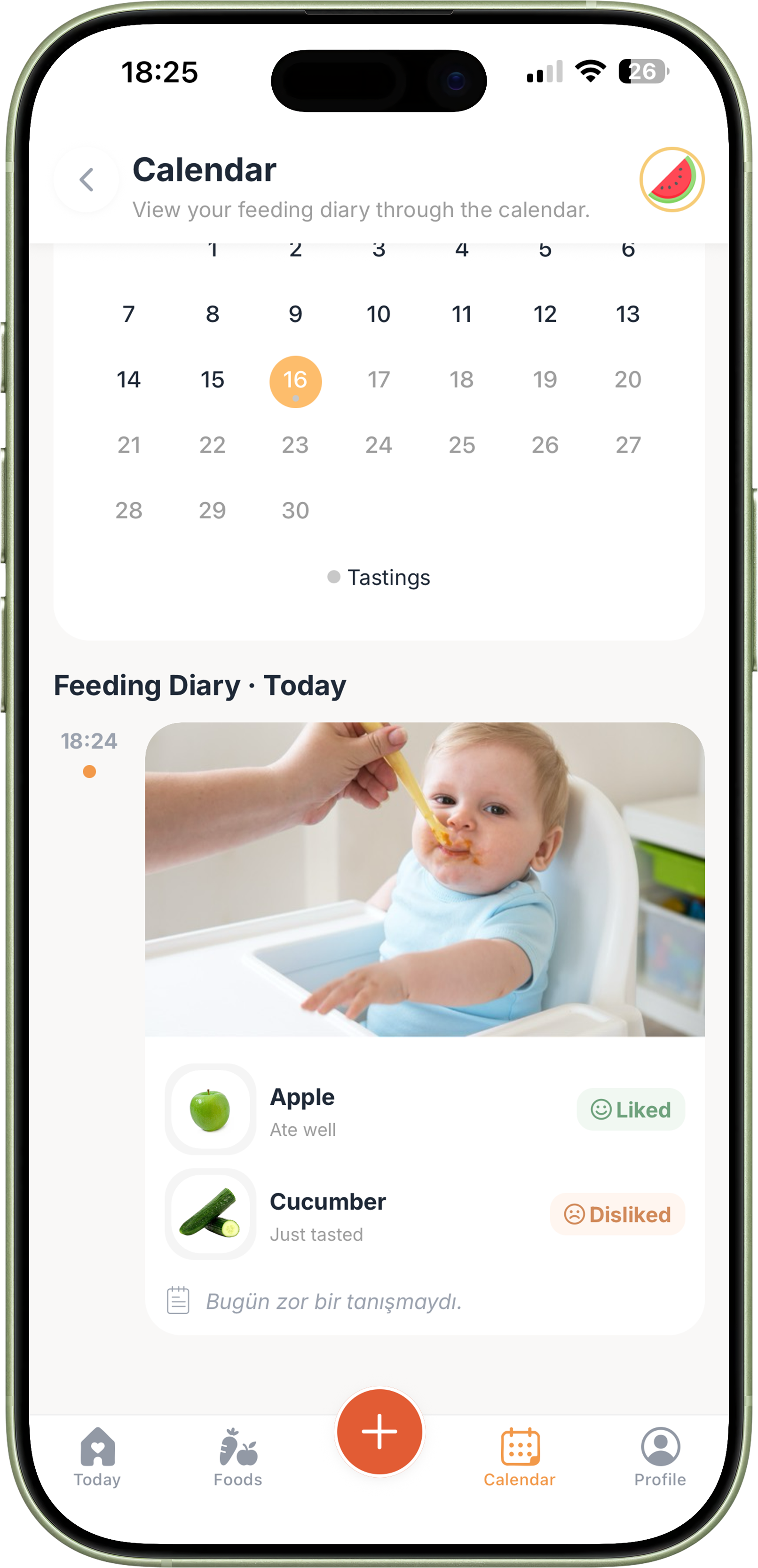
Foods commonly listed as allergens are marked in the library as a reminder to watch closely and talk to your pediatrician. Mamelo doesn't tell you what to feed or when; it helps you remember what happened.
Free printable: first foods tracker
Prefer paper, or want both? Our free printable tracker has simple columns for date, food, reaction, how much and notes. Print it, stick it on the fridge, and start with the next meal.
Frequently asked questions
Do I need to track every single food? No. Logging each new food is the most useful part. For foods your baby has already had, add an entry when there's something worth remembering.
What if I forget to log for a few days? Just pick up where you are. Photos in your camera roll can help you fill in the gaps.
Is a paper tracker or an app better? It depends on how you like to work. Paper is great for an at-a-glance overview; an app is better for photos, search and history. Many parents use both.
Can a food log replace advice from my pediatrician? No. A log is a record of what you observed. For questions about your baby's feeding or health, talk to your pediatrician.
Start with the next meal
A first foods log doesn't need to be elaborate. Date, food, reaction and a photo are enough to answer tomorrow's questions and keep today's moments. Start with the next meal; future you will be glad you did.